

Hello my friends!
I don’t know about you but I love discovering the quirky myths and folklore about the plants I’m growing in my garden (I’m a total plant-nerd) I’m fascinated by plant-lore and how they effect the way we interact with different plants. Surprisingly we’ve had a few days of dry and sunny weather and since the very first signs of spring are starting to appear outside I thought I’d write down the folklore relating to three plants currently flowering in my wildspace. (Its a complete coincidence that they’re all the same colour!!)

I grew these lovely white violets in a pot inside and they didn’t do anything for like a year and a half so I hastily shoved them in the ground last November and lo and behold they’ve flowered!
Violets are such a pretty little flower that is often overlooked, apparently wearing a wreath of them was thought to prevent dizziness and finding only a single flower was said to be a bad omen, while violets flowering in the autumn was the sign an epidemic was on the way.
Theres a wonderful greek myth about violets, which is associated with the story of Io, a nymph who was having an affair with the god Zeus in an attempt to hide her from his wife he turned Io into a cow (so kind of him). It was said that Io was unhappy at the taste of grass to the extent it made her cry and Zeus supposedly created violets from her tears so that she’d have something sweet to eat.
In the language of flowers white violets symbolise innocence and purity.

Snowdrops are one of the much loved winter plants of the UK – a sign that winter is ending and the sun is coming out more, they are also known as the ‘fair maid of February’ these ones have sprung up on the bank by the sycamore tree at the bottom of my garden…I like to think that in one hundred years the whole bank will be covered in them!
The victorians believed that bringing snowdrops indoors meant bad fortune would follow (up to and including death) and another old English superstition says that if you bring a snowdrop into your home your eggs and milk will spoil. (I’ve pressed some snowdrops and can confirm this didn’t happen!).
One of the most popular origin stories about this lovely little flower is actually linked to Christianity. It talks about how Adam and Eve, after being told they must leave the garden of Eden where hopeless and set to wander dejectedly across the earth to which an angel took pity upon them and breathed upon ice creating the first snowdrops telling Adam and Eve to take the little flowers as a sign of hope for people and the earth outside Eden.
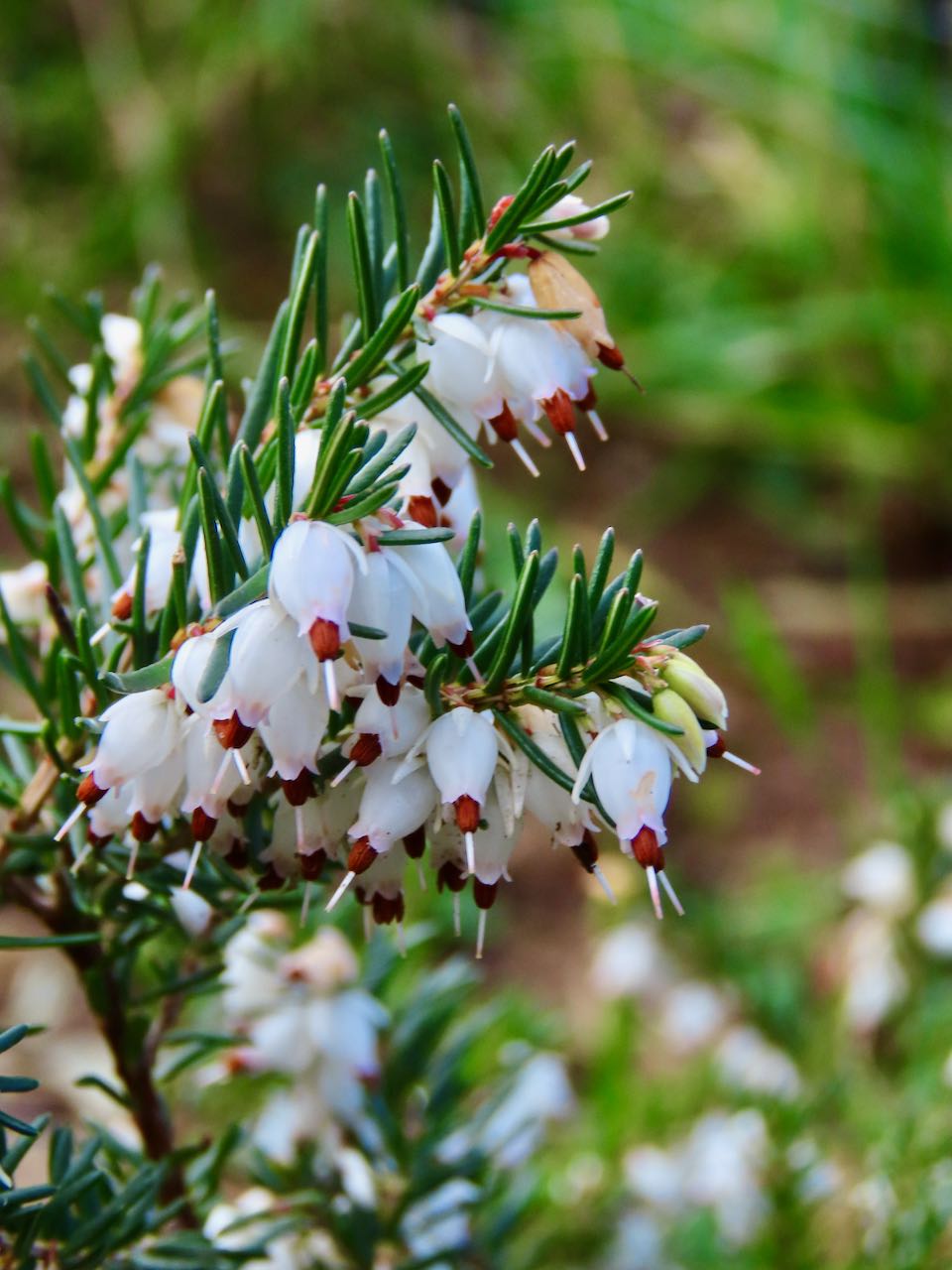
Last summer I planted four baby heather plants in my garden as they’re a great food source for several types of moths and butterflies and they’ve grown and flowered – to be honest I’d actually forgotten about them but to my surprise they’ve grown really well and are currently flowing.
I’ve pressed a few sprigs for my journal and they smell so pretty!
I’m particularly in love with the white heather (the pink ones are very flamboyantly fluorescent!) heather itself is believed to be the resting place for fairies and features in the well known Scottish folklore story of Malvina and the white heather.
The story tells of Malvina, the daughter of a Celtic bard called Ossian. She was betrothed to the brave warrior Oscar who was tragically killed in battle. The messenger who came to tell Malvina carried a sprig of purple heather, which was a final gift from Oscar and as her tears fell of the sprig her grief turned the flowers white and after as she wandered across the moors in grief her tears turned the heather white. Despite her grief Malvina said ‘Although it is a symbol of my sadness, may white heather bring good fortune to all who find it.’
Its still believed that white heather brings good luck to the giver and the receiver when given as a gift and many brides have it in their bouquets for luck.
Well there we have it three pretty white flowers with associated tales and mythology. I really hope you enjoyed this flowery post, I might do more floral folklore posts in the future.
As always thank you so much for reading my friends, and have a lovely week!
 ArtyMissK
Beautiful.
LikeLike
Love the folklore behind these flowers
LikeLike
Me too!
LikeLiked by 1 person