Floral folklore #3

Hello my friends! 

As you know I love discovering the quirky myths, folklore and random stories about the plants I’m growing in my garden (I’m a total plant-nerd) and those that I find on my walking adventures. So seeing as it’s been a while since I posted one of these I thought I’d look at three of my favourite plants to see if there’s any fun stories relating to them!!
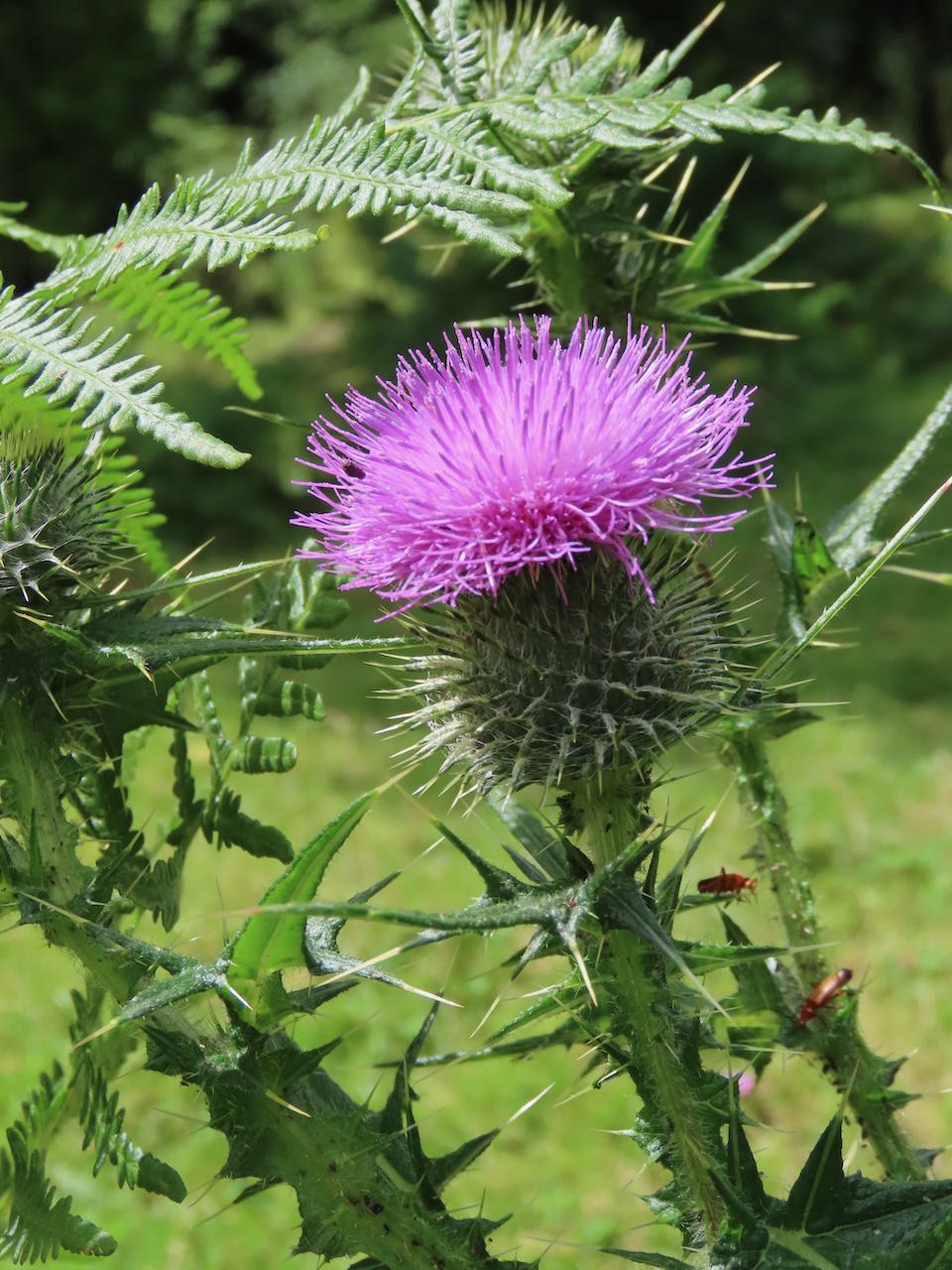
I love a thistle (Cirsium vulgare) they are plants in the Asteraceae family (which believe it or not is the daisy family) and are noted for having prickly leaves and purple, pink, or white flower heads. I grow many, many thistles in the garden and even a random one thats (for some unknown reason) growing in amongst the grass that I don’t have the heart to mow over.

This was one I found while wandering in Cabilla Woods near Bodmin!

Most famously folklore-wise they are known as Scotland’s ‘guardian angel’ and legend says that a band of invading Norsemen removed their shoes in order to creep across the countryside, a thistle was trodden on by one of the Norse invaders which caused him to let out a scream, waking the sleeping Scottish warriors and led to victory for the Scots. It’s still used across Europe to warding off evil, witches and bad luck, typically its hung from doors but I figured the magic would still work if I planted them around the garden.

They are also the caterpillar food plant of Painted Lady butterflies, so thats always a plus!

In folklore cornflowers (Centaurea cyanus) are entwined with love and longing, apparently young men would wear a cornflower and if the blue faded quickly then the love they felt wasn’t returned (which is sad) however they were also popular in bridal bouquets and symbolised hope and fidelity.

Every year I like to throw a packet or two of cornflowers into my garden, the bees love them, I love them and they dry really nicely. I like to cut a bunch or two, hang them upside-down for a couple of weeks in a cool, dry place and then pop them in a little vase or bottle and display them around the house.

In Greek mythology it is linked to the centaur Chiron who was famous as a healer and a teacher to the famed heroes of ancient Greece supposedly he used the flowers to heal Achilles’ poisoned arrow wound. Although there’s also the story of a young man who worshipped the goddess Flora and gathered her many, many blue cornflowers…her thanks was to transform him into one!

And finally we have the foxglove.

When I first started designing my garden I bought a few well established foxgloves (Digitalis purpurea) tall, pink and pretty these flowers are deeply rooted in British folklore linking the plants to fairies. They are also called ‘fairy thimbles’ and are believed to be used by the ‘Good People’ (eg. fairies) for protection or possibly clothing, its considered unlucky to bring them indoors – the flowers not the fairies that is! 

One of the brilliant things about these flowers is that they freely self seed and now I have quite a collection of tall pretty flowers in the summer.

There are a couple of folklore stories from Scandinavia that I love, according to one story fairies taught the foxes to ring the bell-shaped flowers to warn each other when hunters are near and another tale says that the fairies also gave the foxes the flowers to wear on their paws to help silence their footsteps, hence the name foxglove!

They are an excellent source of nectar for bumblebees, moths and Honeybees.

In the language of the flowers they and supposed to symbolise riddles and secrets. They are of course also very deadly poisonous and can also be called dead man’s bells I’ve always been told to wash your hands after touching or planting them! 

Well there we have it three pretty flowers with associated tales and mythology. I really hope you enjoyed this floral post, next week I’m hoping to have a new embroidered butterfly (or two) to share. 

As always thank you so much for reading my friends, and have a lovely week!

Floral folklore #2

Hello my friends! 

How are you?!

I skipped last week because its been so sunny here its really quite distracting and I love it, the plants have tripled in size and I’ve already had ten different types of butterfly in the garden!

This week I thought I’d post another floral folklore, I’m always surprised by how folklore changes the way we interact with the plants around us so I’ve chosen three plants currently flowering in the wildspace all with purple-ish hues!

These lovely little Cuckoo flowers (Cardamine pratensis) pop up all over the garden in spring and they are so delicate, in English speaking countries they actually have a few other names – Lady’s smock/Mayflower or Milkmaids and are actually a member of the same plant family as cabbages!

Continue reading “Floral folklore #2”

Floral folklore

Hello my friends! 

I don’t know about you but I love discovering the quirky myths and folklore about the plants I’m growing in my garden (I’m a total plant-nerd) I’m fascinated by plant-lore and how they effect the way we interact with different plants. Surprisingly we’ve had a few days of dry and sunny weather and since the very first signs of spring are starting to appear outside I thought I’d write down the folklore relating to three plants currently flowering in my wildspace. (Its a complete coincidence that they’re all the same colour!!)

I grew these lovely white violets in a pot inside and they didn’t do anything for like a year and a half so I hastily shoved them in the ground last November and lo and behold they’ve flowered!

Violets are such a pretty little flower that is often overlooked, apparently wearing a wreath of them was thought to prevent dizziness and finding only a single flower was said to be a bad omen, while violets flowering in the autumn was the sign an epidemic was on the way.

Theres a wonderful greek myth about violets, which is associated with the story of Io, a nymph who was having an affair with the god Zeus in an attempt to hide her from his wife he turned Io into a cow (so kind of him). It was said that Io was unhappy at the taste of grass to the extent it made her cry and Zeus supposedly created violets from her tears so that she’d have something sweet to eat. 

In the language of flowers white violets symbolise innocence and purity.

Continue reading “Floral folklore”