
Hey friends! How are ya?
Did you know that the first Saturday in July is National Meadows day!?
Me neither!!
When I discovered Meadows Day was a thing and that it was this weekend I changed my mind on what I wanted to post and feverishly spent some time typing and getting some photos together, only to realise how late it had gotten, so I decided to post it today instead.
Still, better late than never…
According to the dictionary a meadow is ‘a field with grass and often has wild flowers in it.’ I love visiting meadows, wandering through the long grass searching for butterflies, listening to the birds singing and hoping not to attract any ticks.
So I thought I’d share some meadow related snaps from some of my recent adventures!
Meadows have been part of the English landscape for over a thousand years. A meadow is traditionally an area of grassland which is left to grow long through the spring and summer months and then cut for hay and turned into animal feed for during the winter.
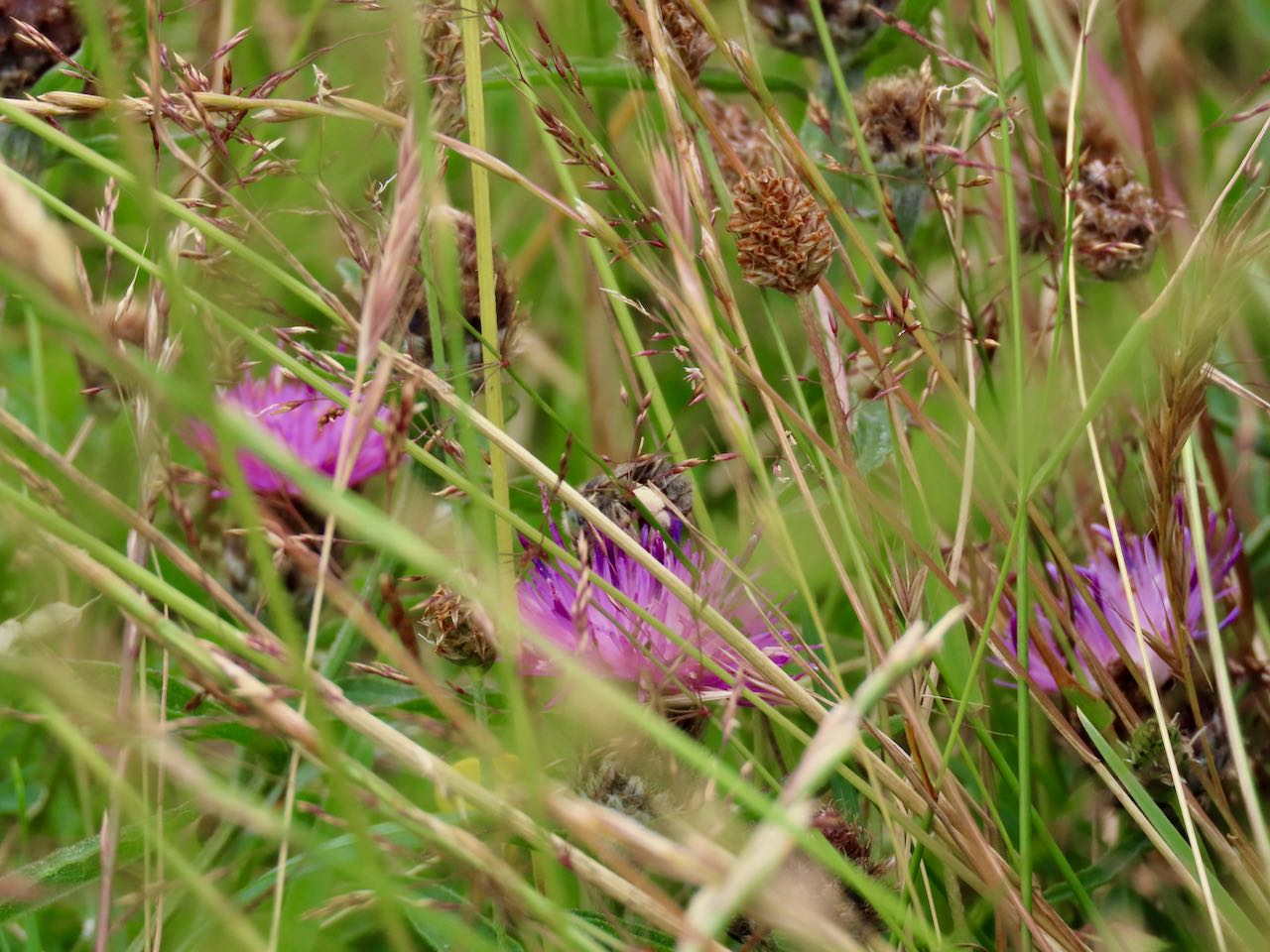
One of my favourite things to do when adventuring is to spend some time just sitting amongst the long grass, listening to the buzzing…if you look closely there is actually a bee on the Knapweed in the centre of the shot – I didn’t realise until I looked back at the days photos.

Common knapweed is like a cross between a Thistle and a Cornflower and are known to attract clouds of butterflies, especially this type Meadow Brown (Maniola jurtina) a friendly medium sized, brown and orange butterfly, they like to fly low over vegetation even in dull weather.

I love an orchid and to be able to see wild ones is thrilling. This is a Pyramidal orchid (Anacamptis pyramidalis) its a common one but still so very pretty, its densely packed bright pink flowers are just so vivid against the overwhelming green of a meadow.
Each flower ‘spike’ can be made of up to 100 flowers!
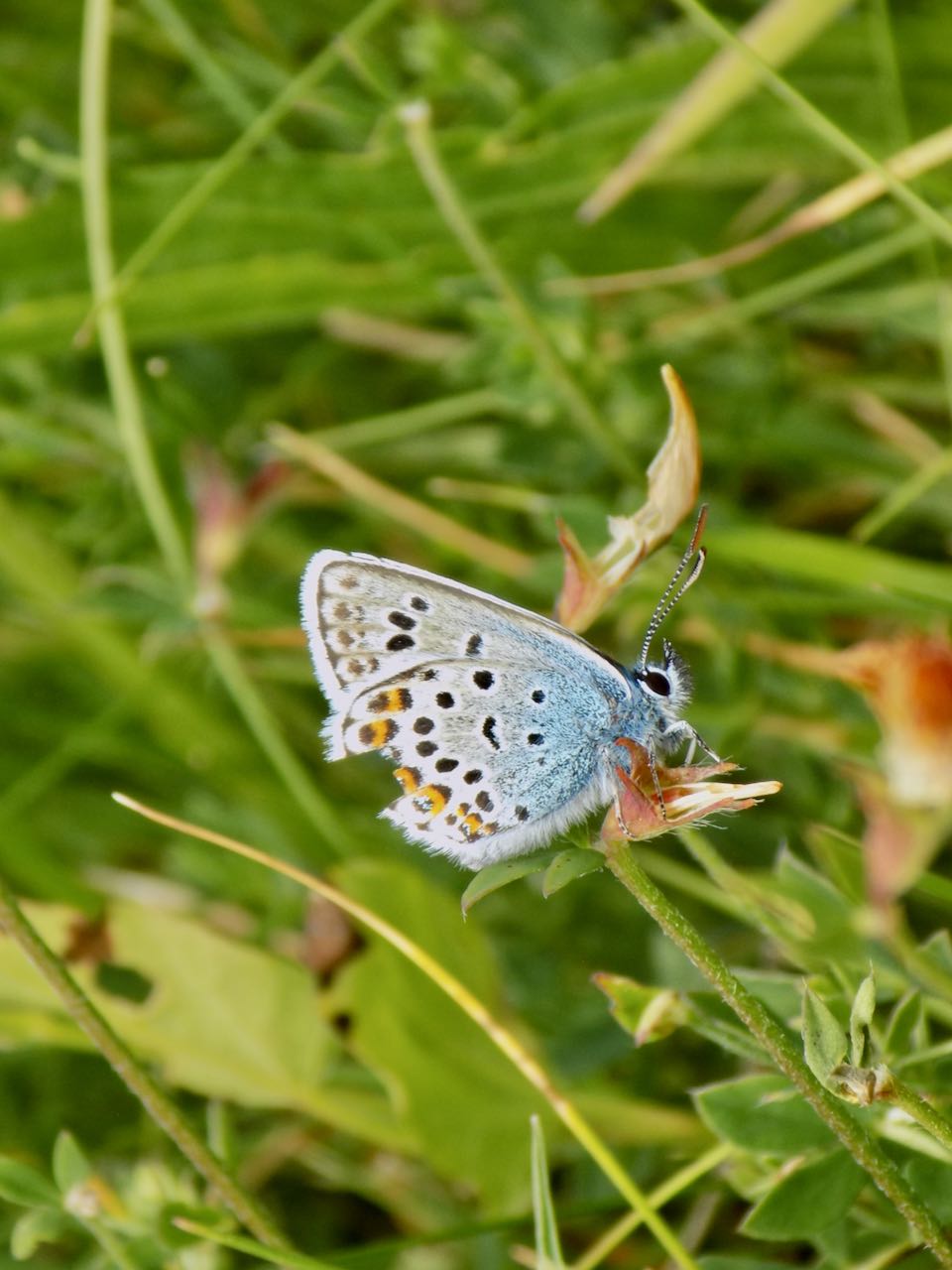
I recently met several meadow-dwelling Silver-Studded blue butterflies (Plebejus argus) at Cubert Common which are becoming increasingly rare!
You can just about see the tiny metallic dots on his damaged wing. There is something really special about blue butterflies.
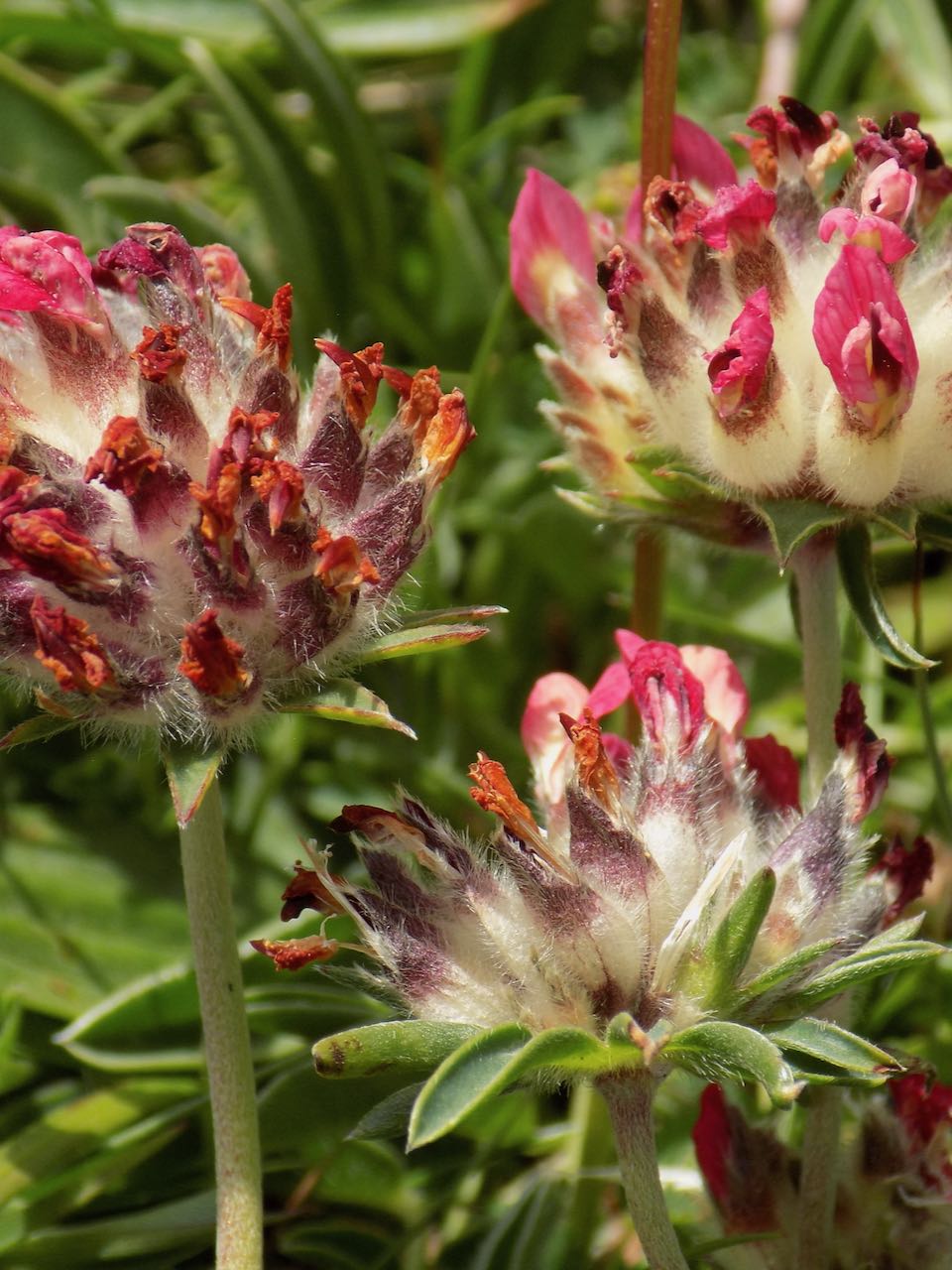
These red Kidney vetch (Anthyllis vulneraria) are probably one of the ugliest plants I’ve ever seen, Kidney vetch’s distinct appearance make it super easy to spot – they are mainly yellow, but also grow in orange and red varieties.
It’s also known as ‘woundwort’ and was used in herbal medicine to heal wounds and to treat stomach and kidney problems.
Not the most attractive, but still beloved by our pollinators.
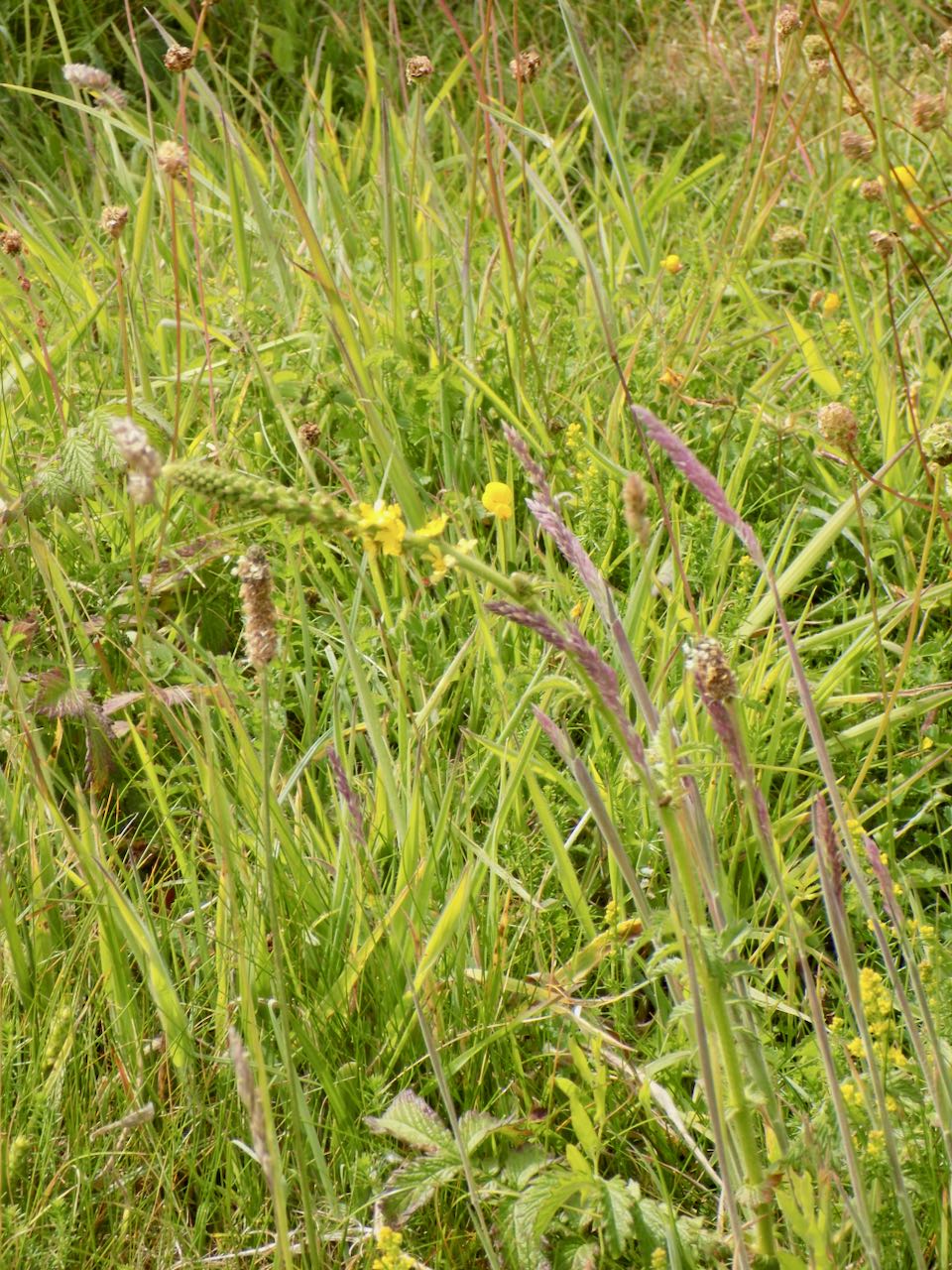
In simple terms meadows are one of our most important habitats, home to fluttering butterflies, happy beetles and endless amounts of wildflowers…it would be a shame if through lack of care we lost them and the diverse life systems they support.
Hopefully you’ll be back to read more of my nature filled posts in the future, thank you so much for checking out my blog and have a great week!
Ps. if you like my nature photography and fancy seeing more of it I’ve joined insta @artymissk maybe see you there!
 ArtyMissK
Stunning discoveries along your journey.
LikeLiked by 1 person
Thank you so much Mary!
LikeLiked by 1 person