
Hello my friends!
It’s been a while since I’ve delved into plant folklore, so I figured why not look at three plants from my garden and see if they have any related quirky myths or tales (which of course the do!).
I’m beginning to think that all plants have some sort of use or story associated with them.
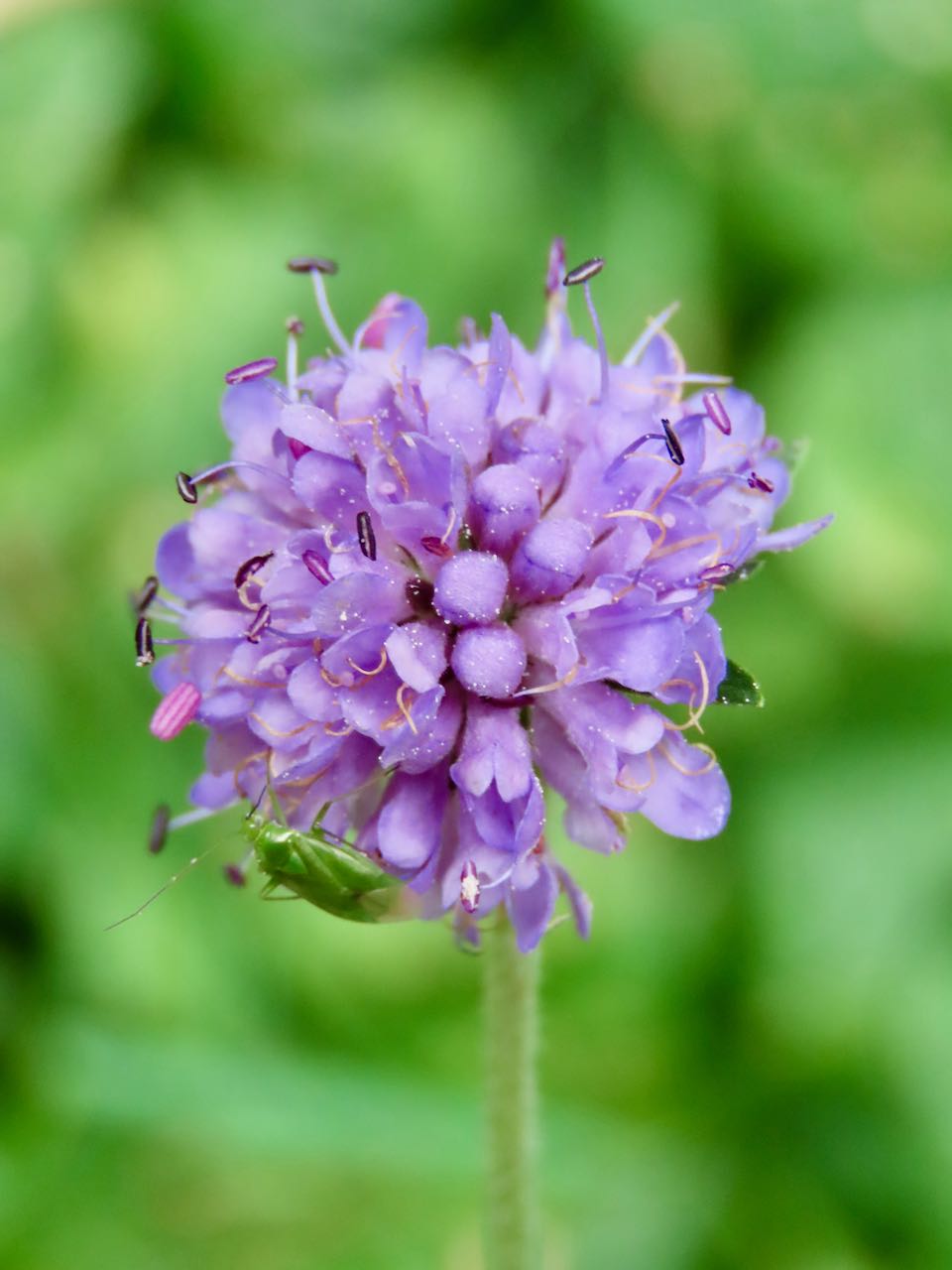
I love a pin cushion flower and while the normal sort are quite ‘flat’ looking Devil’s-bit scabious (Succisa pratensis) blooms into tiny purple pompoms – they attract all sorts of pollinators and are the host food plant for the caterpillars of the Marsh Fritillary butterfly (I’ve yet to see these ones!)
In the olden days this plant was used to treat quite a few skin diseases including scabies and ringworm, but also for fevers, the plague and snake bites!
Folklore says that this lovely plant has black stumpy roots because the Devil became jealous of its healing abilities, so he bit off the lovely root believing it would destroy the plant but it continued to grow and thrive, flowering each year.
Fun fact here in Cornwall we call this plant Sailor’s buttons!
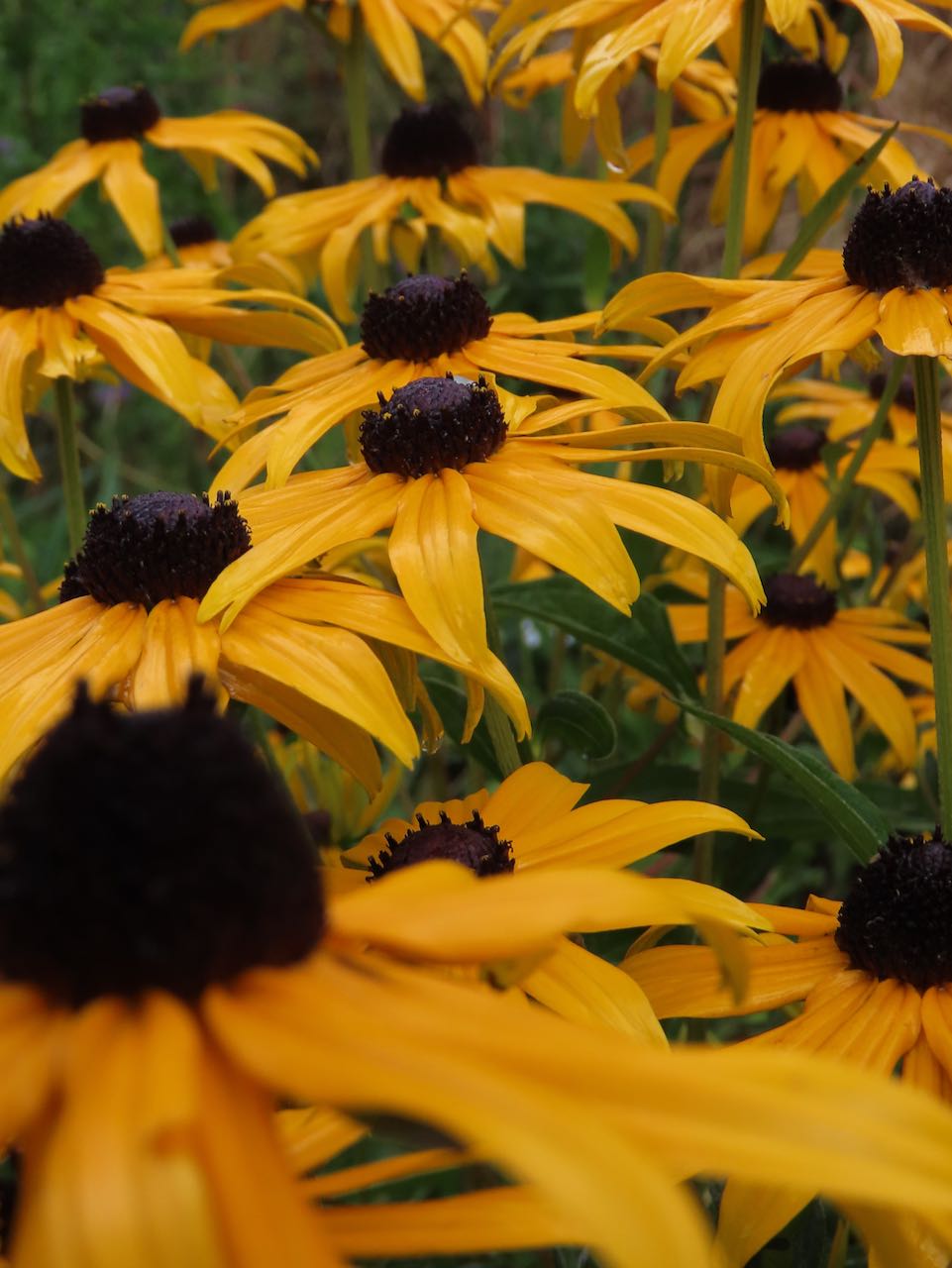
I grow masses of rudbeckia (fulgida var. sullivantii ‘Goldsturm’) its wonderful sunshine yellow flower also know as Black eye-Susan.
These wonderful flowers are actually native to North America despite the fact that their most popular folktale actually comes from an English ballad written in 1720 my the poet John Gay called ‘All in the Downs, Black-Eyes Susan/s Farewell’
Its a story of a young woman called Susan who boards a ship to say farewell to her true love, a sailor called Sweet William before he sets sail. She cries so intensely that she develops dark circles around her eyes. When the ship reaches North America and they find fields of golden sunshine yellow flowers the sailors name them after the weeping woman.
They also named another garden flower Sweet William (Dianthus barbatus) because both of these plants bloom at the same time. Even now in garden folklore by planting them side-by-side ensures that the lovers are reunited. Which is rather lovely.
Obviously it goes without saying that the many indigenous tribes of North America valued rudbeckia long before the Europeans ever knew they existed. Not as a romanic story but as a highly sort after, useful medicinal plant, used to make healing teas and as poultices for external wounds and snakebites.
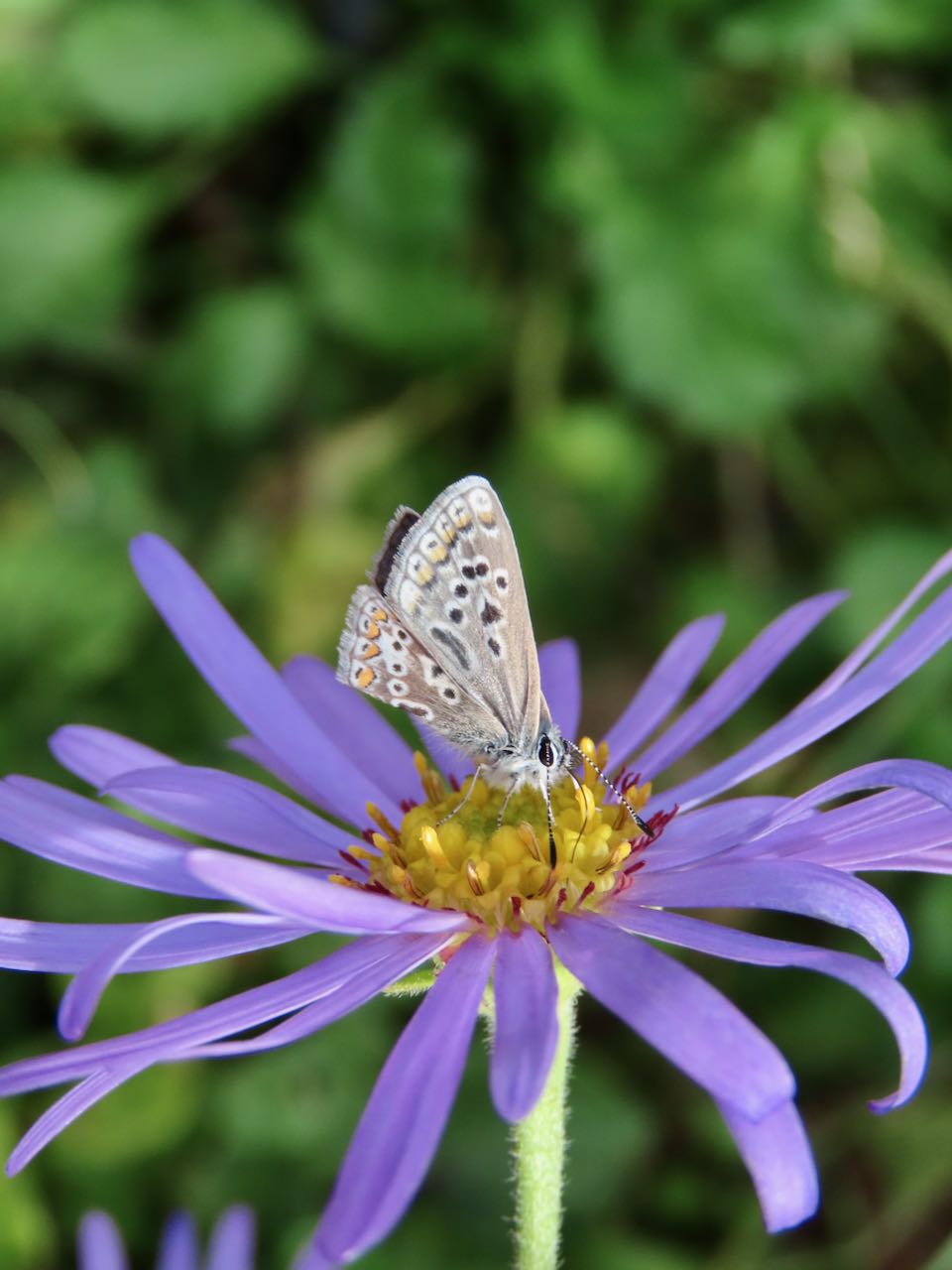
And last but by no means least we have the michaelmas daisy.
I love a michaelmas daisy and grow quite a lot of them in my garden – I like that they begin to flower once everything else begins to wilt, traditionally it is believed to fight off the encroaching gloom of autumn! (Which I think fit them quite well). this one was being visited by a female Common blue butterfly!
They belong to the aster family of plants ‘aster’ comes from the Ancient Greek word meaning star due to the shape of the flowers.
They are named for the feast of Michaelmas and Saint Michael because they bloom around the 29th Septmeber (although this year they were so early).
There’s a rather lovely traditional rhyme about these flowers –
The Michaelmas Daisies, among dead weeds,
Bloom for St. Michael’s valorous deeds.
And seems the last of flowers that stood,
Till the feast of St. Simon and St. Jude.
Well there we have it three pretty flowers with associated tales and mythology. I really hope you enjoyed this floral post, next week I’m hoping to have a new embroidered butterfly (or two) to share.
As always thank you so much for reading my friends, and have a lovely week!

